From “Second Chances” to “Fair Chances”: DeAnna Hoskins Calls on America to Rethink Reentry After Incarceration.
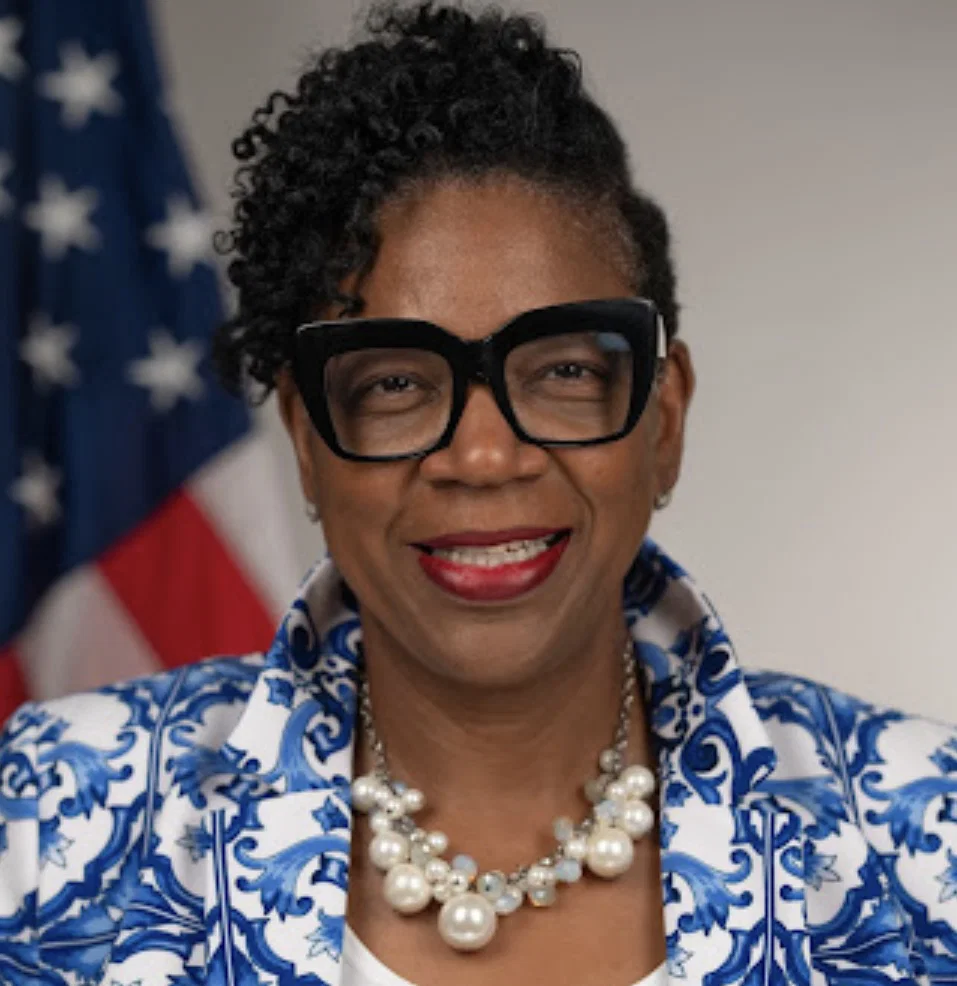
The JustLeadershipUSA CEO is reshaping perspectives on incarceration, expanding opportunities, and redefining who deserves access to a future.
As communities nationwide observe Second Chance Month, DeAnna Hoskins, president and CEO of JustLeadershipUSA (JLUSA), is pushing the conversation further by challenging its premise.
“I often ask, ‘Does the phrase “second chance” unintentionally set limits?’” Hoskins says. “Because what we’re really advocating for is fairness—fair access to jobs, fair access to housing.”
Hoskins has dedicated years to advocating for individuals reentering society after incarceration. Her outlook is rooted in lived experience, which continues to shape how she navigates policy, power, and public safety.
Before advising at the highest levels of government, Hoskins was navigating the very system she now works to reform.
“Part of my story is that I struggled with drug addiction,” she shares. “I’ve been clean and sober for 27 years. What I needed was treatment, not incarceration—but the system didn’t see that. It focused on the charge and sentenced me accordingly, separating me from my children. My daughter was just 8 months old at the time. People should be held accountable, but shouldn’t we also consider the person behind the crime?”
Hoskins says her turning point came after listening to a podcast featuring a courtroom recording, where a judge paused before sentencing to ask, “I want to understand what happened to you that led to this.”
“She saw a person, not just a charge,” Hoskins recalls. “That’s when it really clicked for me.”
That realization became a turning point. Hoskins began requesting to review official policies after being denied jobs due to her probation status.
“They would say, ‘DeAnna, we want to hire you, but our policies won’t allow it because of your felony,’” she explains. “So I asked to see the policy—and in one case, it didn’t even exist. That’s when I started digging into policy.”
What she uncovered went beyond confusion—it revealed systemic inconsistency.
“I saw not just the myths, but clear policy violations,” she says. “Employers were broadly refusing to hire people with criminal records, even though the court had ordered community supervision—and one of its conditions is to be employed.”
That contradiction became a defining moment.
“I adopted a fearless mindset—I was determined to challenge the system,” she says. “Incarceration had broken me to a point where I felt like I had nothing left to lose.”
Second Chance Month stems from the Second Chance Act, signed into law in 2008 under President George W. Bush to support reentry programs and resources.
But Hoskins says the reality of reentry still falls short.
“If a sentence is meant to be the punishment, when does that punishment actually end?” she asks. “Why do these systemic barriers continue if we trust the system to deliver justice?”
For many returning citizens, those barriers appear immediately—limiting access to housing, employment, healthcare, and basic stability.
“We’ve been conditioned to focus on what we can’t do,” she says. “No one ever told me what I could do.”
Through JLUSA’s advocacy, Hoskins and her team have uncovered widespread misinformation about what people with criminal records are legally entitled to access.
From voting rights to housing eligibility, she notes that many of these restrictions aren’t rooted in federal law, but instead stem from local policies or common misconceptions.
“These barriers aren’t always rooted in law,” she says, pointing to the organization’s “MythBusters” initiative, which works to dispel harmful misconceptions.
That misinformation does more than create confusion—it restricts opportunity.
“We’ve been conditioned to believe in our limitations,” she adds.
For business leaders and entrepreneurs, Hoskins says advancing fair access begins with reexamining hiring practices.
Rather than removing background checks entirely, she advocates for greater transparency. Employers should clearly define which convictions are disqualifying and postpone background checks until later in the hiring process.
“At the start, candidates should be evaluated based on their knowledge, skills, and abilities,” she explains.
This shift not only reduces bias—it also broadens the talent pool.
“I may have a record, but I’ve been home for 10 years without any further involvement,” she says.
Hoskins also challenges conventional ideas of public safety, emphasizing that it goes far beyond policing.
“Public safety includes affordable housing. It includes access to healthcare. It includes mental health support,” she says.
Hoskins says that when people with lived experience are included in shaping systems, the result is policy that is both more effective and more humane. “You create systems that don’t retraumatize—systems that engage people and give them a sense of agency.”
At the same time, she is candid about the economic forces driving mass incarceration.
“Incarceration is a billion-dollar industry,” she says, pointing to sectors tied to everything from prison communications to commissary services.
Because of that, she believes real change requires more than reform—it demands reducing reliance on a system built on profit.
“We have to build fair opportunities so people aren’t funneled back into incarceration,” she says.
For Hoskins, one of the most persistent misconceptions about people with lived experience is that their stories exist to inspire rather than to inform.
“I don’t want my story to inspire you,” she says. “I want it to shape how you approach policy.”
It’s a distinction that reframes not only Second Chance Month, but the broader national conversation. As she sees it, the question isn’t whether individuals deserve another opportunity.
“This isn’t about second chances,” she says. “It’s about whether the system provides a fair chance in the first place.”