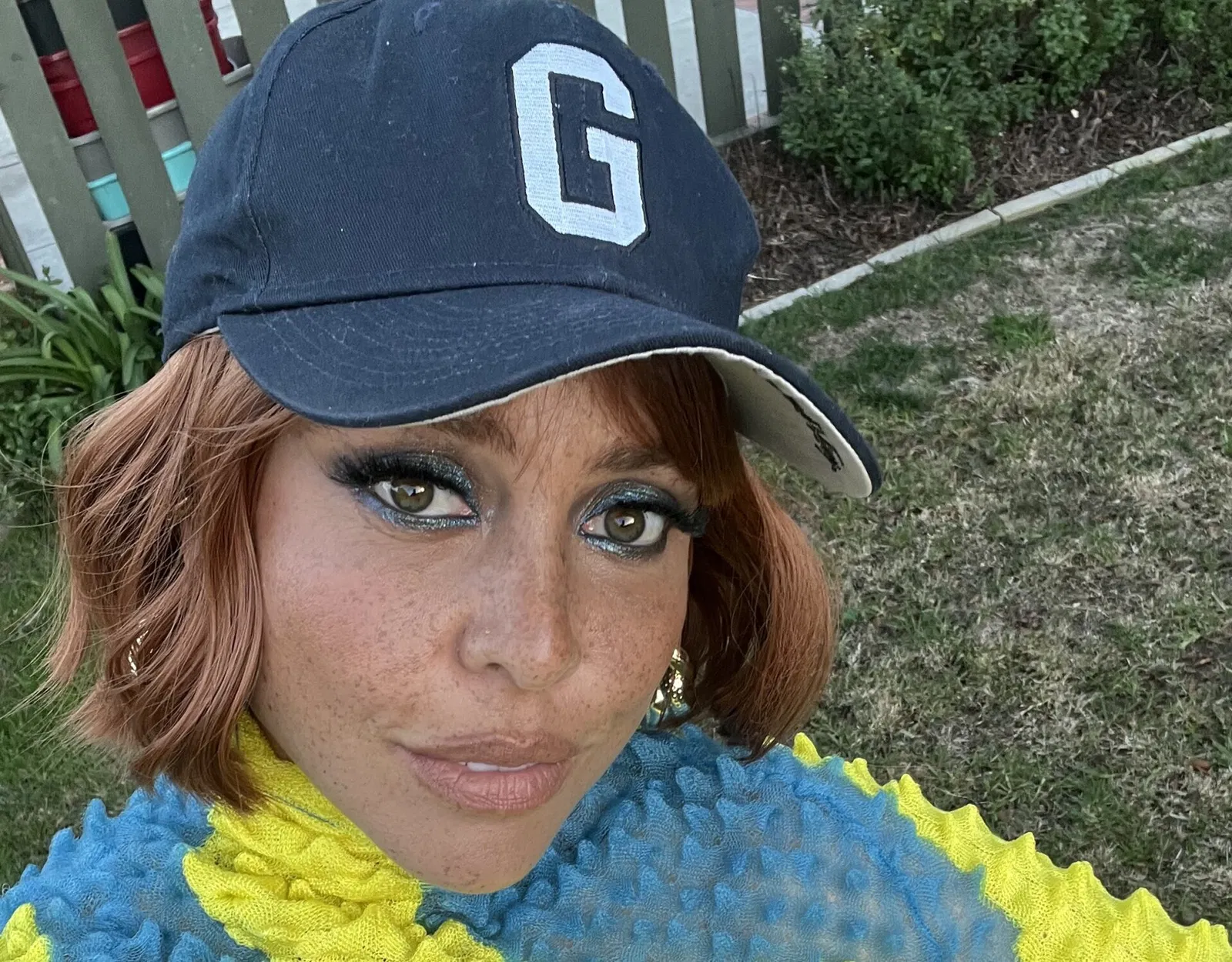
Dominique Dawson: The Costume Designer Defining the Look of GOAT, Sony Animation’s Bold New Feature.
The San Francisco native ventures into the world of animation.
Audiences can expect the movie theater to transform into a full-blown jungle with GOAT, which hit the box office on Feb. 13. Blending global sports culture, next-generation animation, and fearless creativity, the Sony Pictures Animationrelease boasts major pedigree, drawing from the creative minds behind K-Pop Demon Hunters and Spider-Man: Across the Spider-Verse, with a production team that includes four-time NBA champion Stephen Curry, who also voices Lenny the giraffe.
While viewers are sure to fall for the film’s roster of athletic animals, its richly immersive world is brought to life through the vision of Emmy-nominated costume designer Dominique Dawson. A multidisciplinary creative, Dawson is known for bold, story-driven work that has shaped projects such as Origin by Ava DuVernay, Swarm from Donald Glover, and HIM produced by Jordan Peele.
With GOAT, the San Francisco native ventures into a bold new arena: animation. The original action-comedy follows Will, a small goat given the once-in-a-lifetime chance to chase his biggest dream—competing in professional roarball, a high-octane, co-ed, full-contact sport ruled by the fastest and fiercest animals on the planet.
Dawson says she approached GOAT with a clear intention: to build a world that felt culturally grounded and visually authentic.
“I really wanted to step into the world of Vineland,” she shared. “The climate and the actual landscaping of the town are very jungle-inspired. It’s hot, there are a lot of hills—there’s a lot to navigate. We knew heavy layering and big coats wouldn’t make sense in that environment.”
To bring that realism to life, Dominique Dawson immersed herself in research.
“I built out decks and dove into studying animal movement and anatomy, really understanding the different species,” she explained. “Then we looked at what these animals do for a living. Creating that hierarchy—careers like lawyers, doctors, and construction workers—ended up informing so much of their look.”
For Dawson, animation opened the door to a level of creative freedom that’s rarely possible in live action.
“Usually, I’m thinking about logistics—how do I even get my hands on a couture piece? Will it arrive on time? Will it show up two sizes smaller than promised?” she says. “None of that factored into this process, which was incredibly freeing. I really got to go all in.”
That freedom was especially vital when designing Jett Fillmore, the league’s celebrated MVP, voiced by Gabrielle Union.
“I wanted Jett to feel powerful,” Dawson explains. “I started out playing with power suits, but I realized that by showing more of her frame, you get a clearer sense of her confidence, her swag, and her femininity.”
She adds, “It still feels like she’s walking that line between masculine and feminine energy.”
The scale of the work was immense.
“Even for a single rendering of Jett’s look, we’d explore nearly 60 variations—different colorways, tweaks, and details—and that was just one outfit,” Dawson explains. “The real challenge was the catwalk looks. That’s where we knew we had to make a bold statement.”
That same level of care extended across the entire cast, especially Will, the undersized rookie driven to prove that smalls can ball.
“I studied a lot of streetball—places like Rucker Park and West 4th Street Courts,” Dawson says. “He’s that smaller player who shows up to the court wanting to look as big as possible. A slim silhouette wouldn’t serve him—he needs to fill it out.”
Her solution was to dress Will in a baggier hoodie, layered over longer tees to amplify his presence on screen.
“As you watch his journey and growth after getting drafted, he starts out in straight practice gear,” she adds. “Then you see him step into a deconstructed bomber jacket and a range of looks that signal he’s got some money now—and the freedom to express himself through his style.”
Although roarball exists within an all-animal universe, its aesthetic is firmly grounded in recognizable cultural references—an authenticity Dawson drew from her own experiences.
“I grew up playing basketball, so I have a really strong understanding of the sport,” she says. “I pulled from gladiator-style influences and from attending games myself. I’m a sports fan, and I had just come off two football films back-to-back, so I had a clear sense of fandom and that energy. The gladiator aspect elevated everything because this is a global league—the stakes are high, it’s do-or-die, and we wanted that intensity to be felt.”
The result is a world that feels both imaginative and instantly familiar. Animation also gave Dawson the freedom to push design choices that would have been impractical—or even unsafe—in a live-action setting.
“Modo is one of my favorite characters,” Dawson says, referring to the Komodo dragon voiced by Nick Kroll, one of the film’s most energetic figures. “If an actor were wearing tight denim with all these belts and piercings, there would be real safety concerns—doing flips, stunts, all that action and quirkiness. With animation, we didn’t have those limits, and that’s where technology really came into play.”
The filmmakers behind GOAT embraced cutting-edge tools throughout production. Recent technical advances made it possible to render highly detailed characters, complete with fur, hair, layered garments, and accessories—a challenge that demanded careful attention to balance visual complexity within each frame.
For Dawson, these tools also amplified emotional resonance.
“There was a holographic effect on the jerseys…it created this surreal, almost magical space,” she explains. “Those moments really landed and had a real impact.”
Though her work mostly unfolds behind the scenes, Dawson views costume design as a core element of storytelling.
“The union I belong to runs a campaign called ‘Naked Without Us,’ and that really sums it up,” Dawson says. “Without costume designers, it would literally be actors just walking around naked. We’re a vital part of the story.”
A graduate of the director’s program at NYU Tisch School of the Arts, Dawson approaches every project through a storytelling lens.
“Every choice on screen has to serve the story, elevate it, and move it forward,” she explains. “I always start with the script, but I also think of it like painting. If there’s too much red in one spot…you have to balance the energies of the characters.”
After designing over 160 television episodes and collaborating with visionary filmmakers, Dawson remains driven by creative risk.
“I love the weird. I love the strange,” she says. “I’m drawn to showing things we don’t usually see. I’m not interested in just creating a standard commercial vibe—that’s not me at all.”
It’s that fearless, imaginative spirit that made GOAT a perfect fit—a project she describes as firmly rooted in empowerment.
“Our main goal was really about body positivity, celebrating all sizes, and empowering everyone,” Dawson says. “We wanted the costumes to reflect that mission.”
Looking ahead, Dawson sees plenty more animation in her future.
“Absolutely,” she says when asked about returning to the medium. “You’re collaborating over Zoom with illustrators in South Africa, Paris, or Canada, creating magic on the computer from home. I love that.”
As animation continues to push the limits of technology, culture, and storytelling, designers like Dawson are shaping the way audiences connect with characters—even before a single line is spoken. And if GOAT is any indication, she’s only just getting started.