Why Michelle Obama Continues to Face Transphobic Attacks.
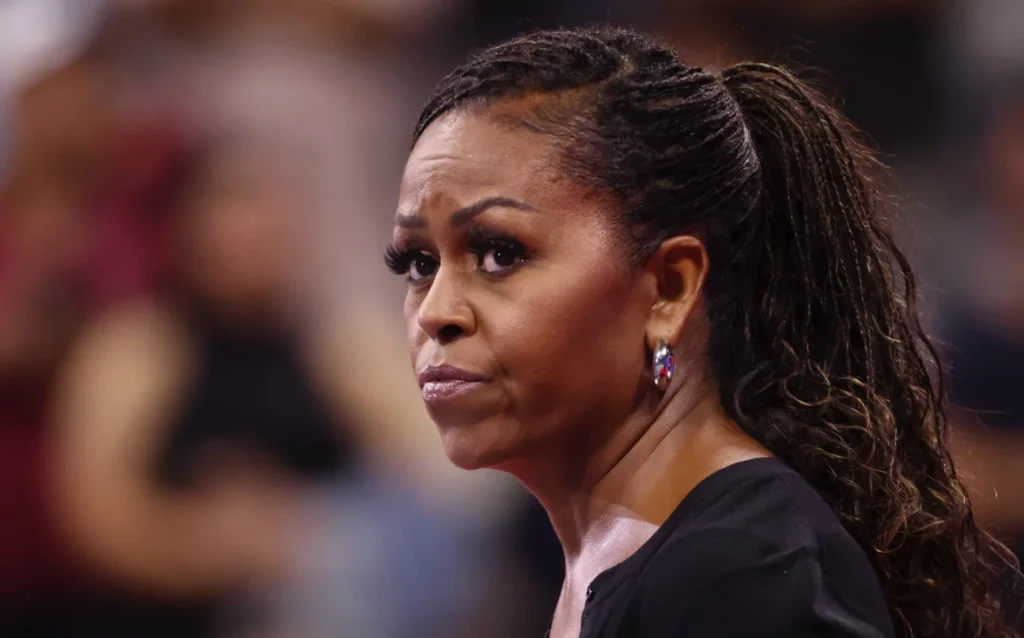
When womanhood is put on trial, no one truly passes.
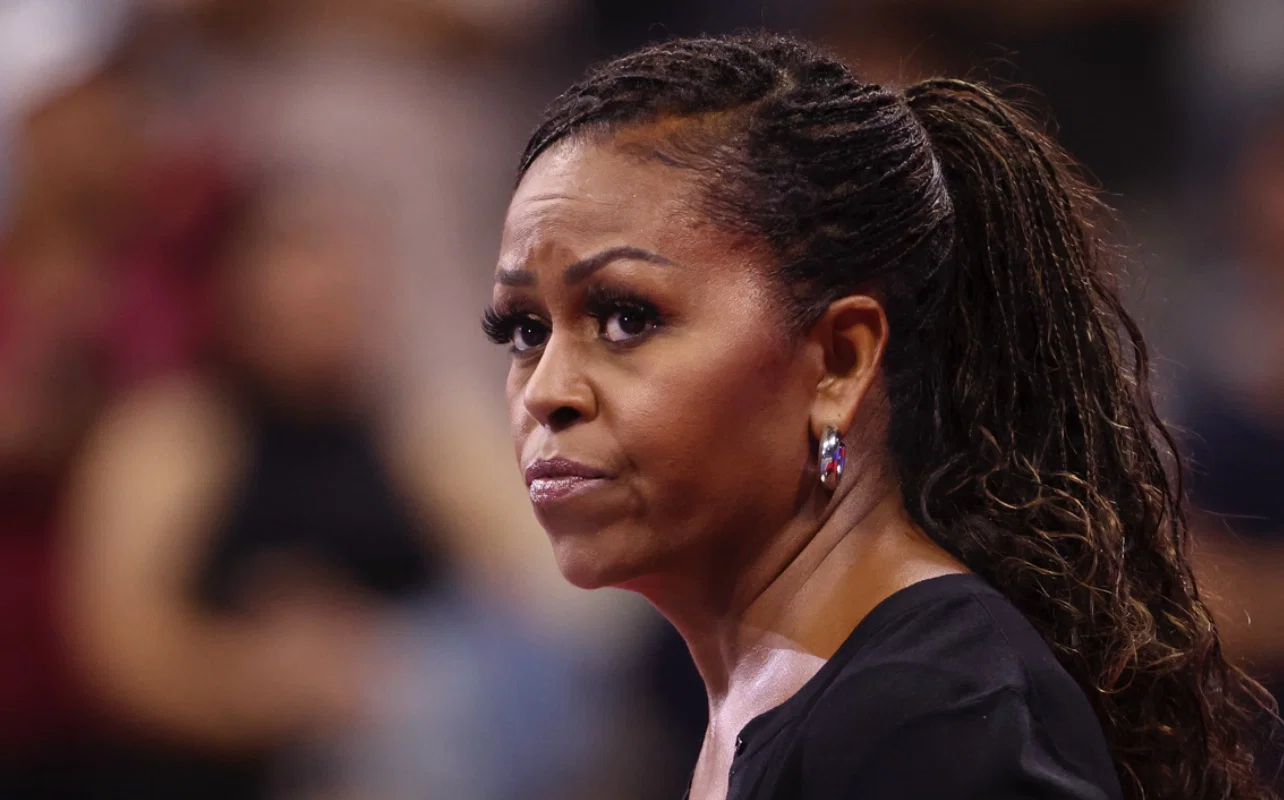
During a post-fight interview on the White House grounds on Sunday, June 14, UFC fighter Josh Hokit repeated a claim that has circulated about former First Lady Michelle Obama for years.
During a post-fight interview with right-wing podcaster Joe Rogan at UFC Freedom 250—the first professional sporting event held at the White House—Josh Hokit repeated a false claim about former First Lady Michelle Obama, saying, “Michelle Obama is a man, am I right, America?”
For some, the comment may have seemed easy to brush off as crude, ignorant, or merely an attempt to grab attention. Others dismissed it as a joke. But it warrants closer examination—not because it was original, but because it echoed a narrative that has persisted for years. Its familiarity is precisely what makes it so damaging.
Michelle Obama has long been the target of racist and sexist attacks.
Michelle Obama has spent years enduring racist and sexist attacks that question her appearance, femininity, and even her identity as a woman. But these attacks did not begin with social media. Long before online platforms amplified such rhetoric, Black women were forced to navigate a society that has often denied them the grace, softness, and humanity routinely extended to white women.
The conspiracy theory known as transvestigation builds on this history. It falsely claims that public figures—particularly cisgender women, or women who were assigned female at birth and identify as women—are secretly transgender. Although often dismissed as fringe internet speculation, these accusations stem from the same harmful belief that fuels anti-trans panic: that strangers have the right to scrutinize another person’s body, appearance, or identity to decide who is “really” a woman.
For years, opponents of transgender rights have framed their arguments as efforts to protect women. They point to bathrooms, sports, identification documents, healthcare, and public accommodations, insisting that the debate is about safety, fairness, and common sense. But what unfolded this past Sunday exposed a different reality. It showed that these narratives do not simply target transgender people—they also reinforce rigid ideas of womanhood that place all women under suspicion, especially those whose appearance or identity falls outside narrow social expectations.
What happened at the White House was not simply an attack on Michelle Obama. It was a reminder of how racism, misogyny, and transphobia often intersect—and how the harm caused by anti-trans rhetoric reaches far beyond the transgender community.
The insult only works if people accept the premise that being perceived as transgender is something shameful. That assumption is not incidental; it is the foundation of the attack. The joke depends on the idea that being mistaken for a trans woman is inherently degrading, reinforcing the notion that certain expressions of womanhood are less valid than others.
Transgender women already bear the heaviest burden of this thinking. Many face harassment, discrimination, and violence simply for existing openly. Being publicly accused, singled out, or involuntarily “outed” can result in lost employment, housing instability, social isolation, and physical harm. Black transgender women, in particular, continue to experience disproportionately high rates of violence and fatal attacks.
But once society accepts the idea that womanhood can be judged based on appearance, there is no logical stopping point. Gender policing has never remained confined to one group. It inevitably expands to anyone who does not conform to narrow and often racialized expectations of femininity.
We continue to treat womanhood as something that must be verified, inspected, and proven. In that system, everyone becomes vulnerable. The question is no longer whether someone is a woman—it becomes whether they are considered woman enough. History has shown the consequences of that mindset.
Black women, in particular, have carried this burden for generations. Their bodies, features, voices, and identities have long been subjected to scrutiny rooted in both racism and sexism. What happened to Michelle Obama is not an isolated incident but part of a much longer history of policing Black womanhood. When society grants itself permission to decide who qualifies as a “real” woman, no woman’s identity is truly beyond question.
The Problem with Eurocentric Standards of Femininity.
The National Black Justice Collective has noted that women of color are disproportionately accused of being transgender or intersex because of racist assumptions about their bodies and rigid expectations of gender conformity. Across the country, cisgender women have reported being confronted in public restrooms after strangers deemed them “too masculine.” Female athletes have had their bodies scrutinized and their identities questioned. Women whose appearance falls outside narrow, often white-centered Eurocentric beauty standards are routinely subjected to invasive speculation about their bodies and womanhood.
This pattern reflects a much longer history of misogynoir—the unique form of discrimination created by the intersection of anti-Black racism and sexism experienced by Black women. For generations, Black women have been denied the same recognition of femininity routinely afforded to white women. They have been stereotyped as aggressive, masculine, hypersexual, physically imposing, and inherently at odds with the delicate ideal of womanhood that American culture has long associated with whiteness.
The consequences of these stereotypes remain visible today. World-renowned athletes such as Venus Williams, Serena Williams, and Brittney Griner have repeatedly had their bodies mocked and masculinized. Artists including Ciara and Megan Thee Stallion have endured similar attacks online. Again and again, Black women are made to defend their femininity—to confront the false notion that their strength, stature, facial features, or confidence make them somehow less womanly, or that their very existence demands explanation.
The message becomes clear: when a woman does not conform to a narrow, Eurocentric standard of femininity, her womanhood is treated as something to be questioned. That same logic sits at the center of much of modern anti-trans rhetoric.
This is why transphobia—or transmisia, a term some prefer because it emphasizes active prejudice and systemic discrimination rather than fear alone—is not only a transgender issue. It is a broader cultural and justice issue. And it is why these debates are not simply about language or policy; they shape how people move through the world, determine who is protected, and define who is seen as worthy of dignity. These are concerns that activists have raised for years.
And yet, the pattern persists.
When a public figure can stand on White House grounds and casually repeat transphobic and racist rhetoric about a former First Lady, it reflects how normalized these ideas have become. It signals that questioning a woman’s identity can be treated as entertainment, and that accusations tied to transgender identity are still widely used as punchlines—reducing trans people to jokes in the process.
But there is nothing harmless about this dynamic. There is nothing funny about a culture that encourages people to distrust women based on appearance. There is nothing neutral about rhetoric that invites strangers to evaluate, police, and challenge someone’s identity. And there is nothing protective about a movement that claims to defend women while fostering an environment where women are constantly required to prove themselves.
This is not about Michelle Obama deserving better because of who she is. It is about recognizing that all women—cisgender, transgender, and queer—deserve better simply because they are human beings.
No one should have to meet a prescribed standard of beauty, softness, size, race, or presentation in order to be treated with respect and dignity. No one should be expected to perform femininity to satisfy the expectations of strangers. And no one should have to live with the fear that their identity will be questioned simply because they do not conform to someone else’s idea of what a woman is supposed to look like.
The answer is not determining who does or does not count as a woman. It is recognizing the full humanity of all women, and rejecting the systems that treat their identities as something open to public judgment. Because once we allow others to decide who is a “real” woman, we create a world in which every woman becomes subject to scrutiny—and none of us are truly beyond it.