Strong Black woman—or silently suffering? The hidden cost of emotional suppression.
How can Black women start to release the pressure of the “Strong Black Woman” identity?
The doctors said my heart was broken.
Not figuratively. Not emotionally. Literally—physically.
I was lying in a hospital bed after intense chest pain when doctors told me my heart had quite literally been affected. It wasn’t symbolic or emotional—it was Takotsubo cardiomyopathy, a condition triggered by overwhelming stress. In that moment, everything slowed as I processed the grief of losing my brother, the weight of betrayal in my marriage, and the presence of someone tied to that pain.
Yet even then, I had been showing up. Smiling. Functioning. Still carrying the expectation to be “strong”—a reality many Black women know all too well.
This experience goes beyond me; it reflects a deeper, shared truth. Black women are often conditioned to endure pain in silence, while studies continue to reveal disparities in how their suffering is perceived, especially in healthcare. If even physical pain is dismissed, it raises a harder question—what happens to the emotional and mental toll?
As bell hooks writes in All About Love, healing rarely happens in isolation—it requires connection. Yet too often, Black women are expected to carry their pain alone, without the support that true healing demands.
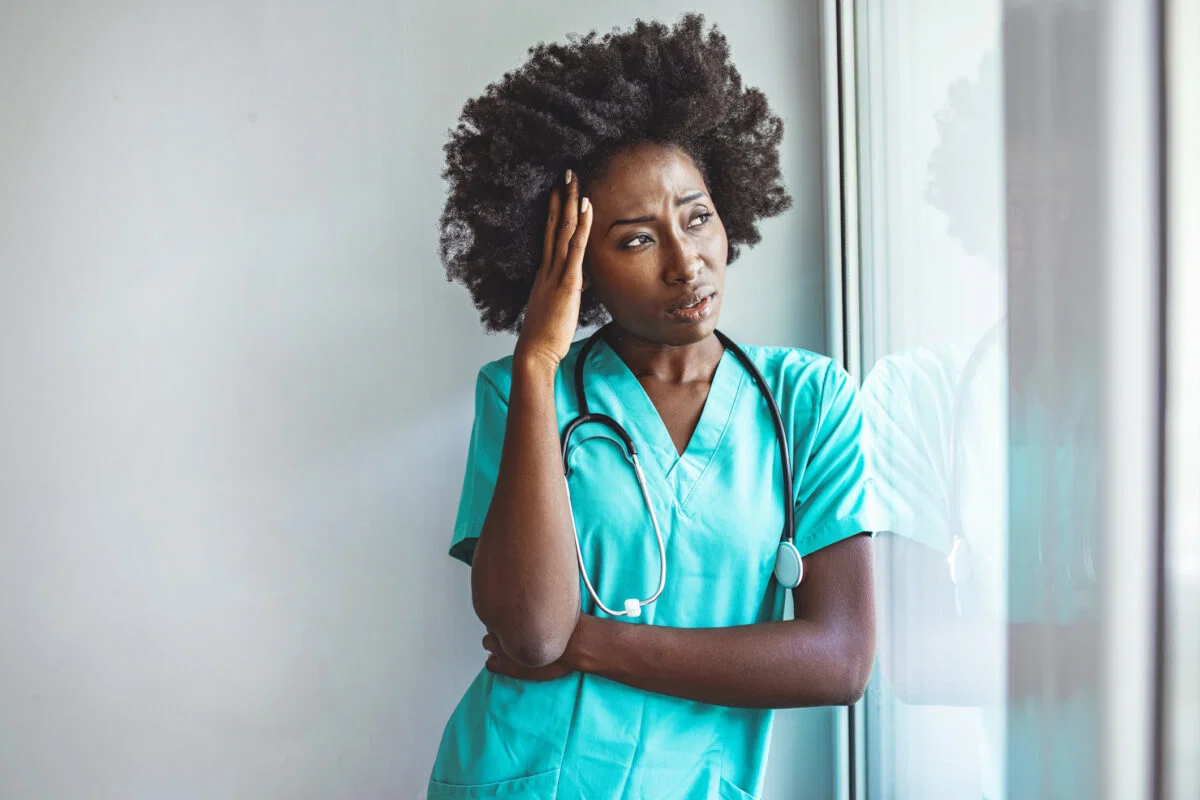
From the outside, I looked like I had everything together. I kept showing up, meeting responsibilities, and presenting myself as composed. But inside, I was dealing with what’s often described as functional depression—carrying on while quietly falling apart.
I was having panic attacks, deep fatigue, constant dread, memory lapses, and an overwhelming sense of loneliness. Even when I said I wasn’t okay, it was often brushed aside and replaced with reminders of how “strong” I was.
The “Strong Black Woman” identity is often praised, but it carries a heavy cost. It can require constant emotional suppression, self-sacrifice, and an unrelenting need to endure, which over time may contribute to chronic stress, illness, and burnout. As Dr. Joy DeGruy explains in her work on Post Traumatic Slave Syndrome, generational trauma has shaped coping patterns like over-functioning and emotional restraint within the Black community—strategies rooted in survival, not healing.
My turning point came when I realized that being functional wasn’t the same as being well. I had to choose myself—not the version others depended on, but the version of me that needed care.
So how do Black women begin to break free?
It starts with naming the conditioning. Emotional suppression is not just personal; it is cultural and generational. Seeing this clearly allows us to release self-blame and understand our patterns with more compassion.
It also requires redefining strength. Strength is not silent suffering—it is boundaries, honesty about our limits, and the courage to choose ourselves without guilt. Rest becomes essential, not optional.
For Black women, rest is not indulgence; it is resistance against cycles of overwork and survival mode. Healing also means rebuilding community—creating spaces where vulnerability is safe and not minimized. And it means stepping out of emotional confinement intentionally, not by forgetting the past, but by refusing to abandon ourselves in the process.
This conversation cannot be limited to the moments when public figures speak about their experiences. Every day, Black women carry emotional burdens that often go unseen and unspoken. This dialogue needs to continue—in our homes, communities, and across systems.
For generations, Black women have been praised for endurance but rarely asked what it costs them. I was applauded for my strength even as my body was breaking down. I reached a point where I had to choose between the identity I was conditioned to uphold and the version of myself I needed in order to survive.
I chose myself.
And perhaps it’s time more of us do the same.
Because strength should not come at the expense of well-being.
And healing was never meant to be done alone.