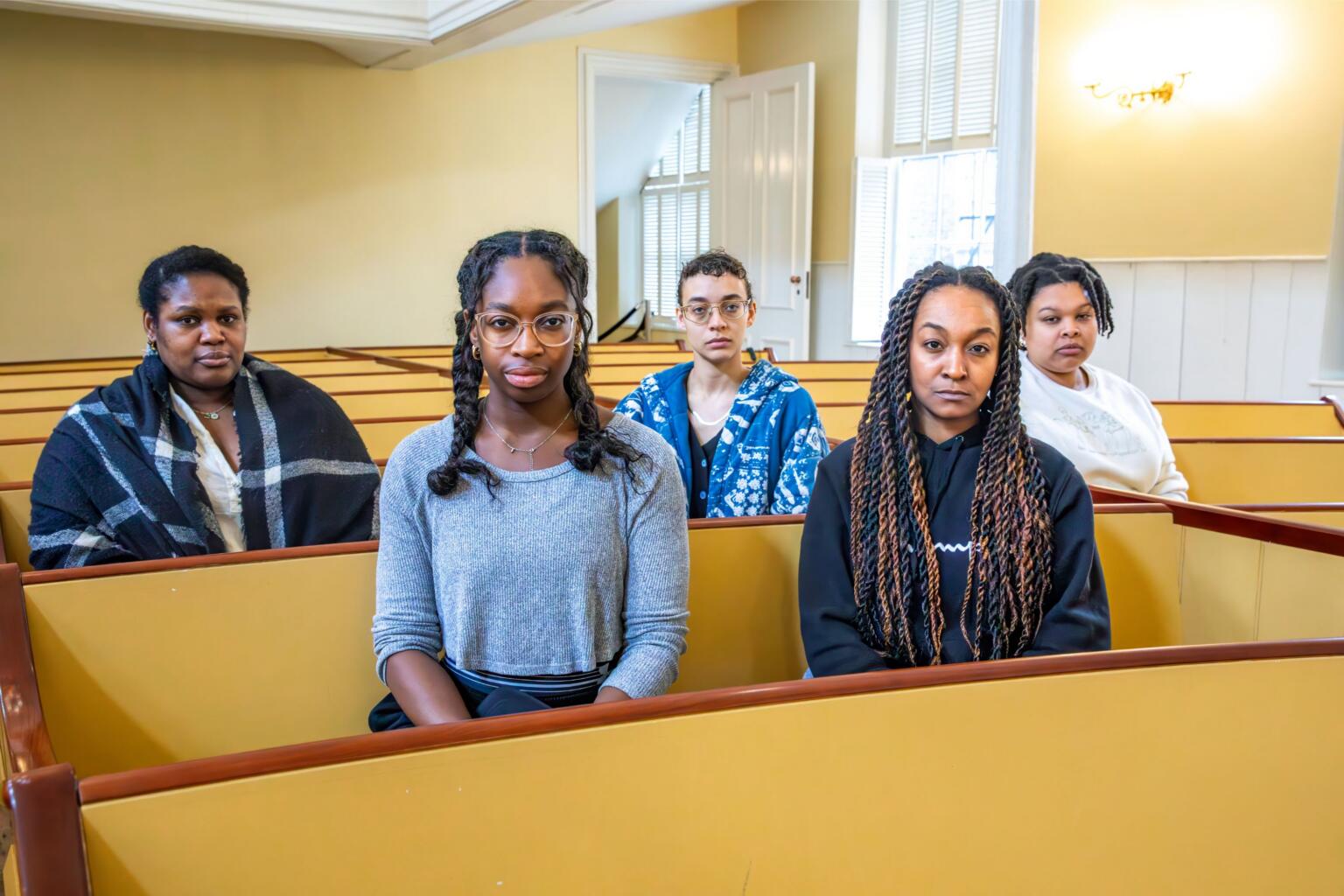
Company One ushers in a new era by bringing Black suffragist stories to the stage.
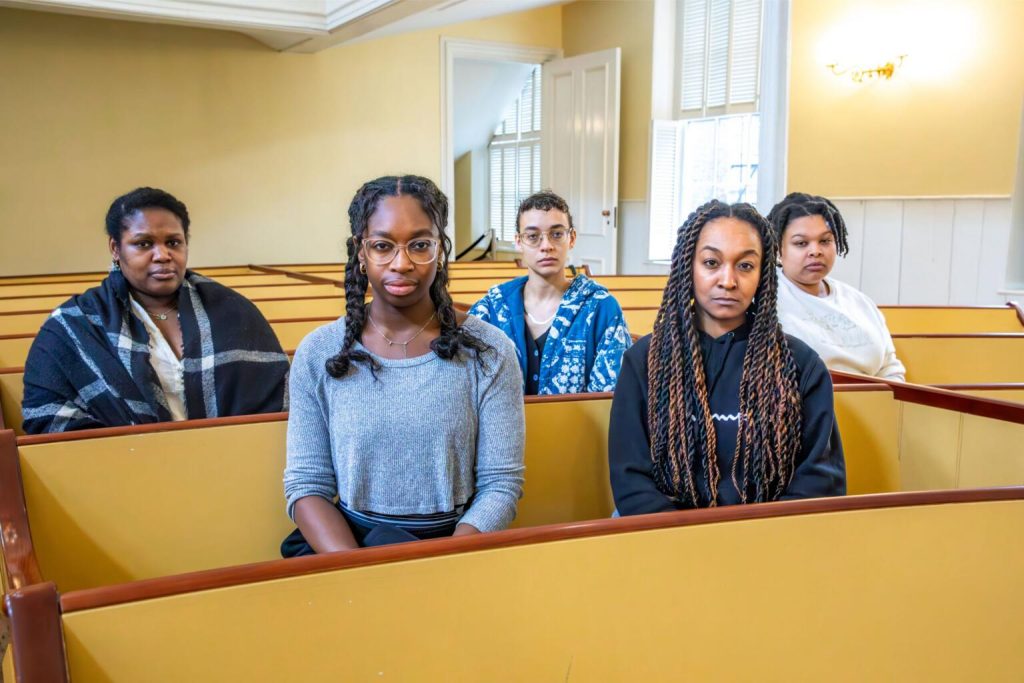
While Boston is widely celebrated for its role in the American Revolution, abolition, and the women’s suffrage movement, playwright Miranda Austen ADEkoje believes many of the city’s Black history stories have long remained overlooked. Growing up in Boston, she learned the familiar tales of Paul Revere and the Boston Tea Party but later discovered the legacy of Black activist Josephine St. Pierre Ruffin and the groundbreaking National Conference of the Colored Women of America—the nation’s first gathering of its kind, held in Boston.
Inspired by that discovery, Austen ADEkoje wrote “A New Era,” Company One’s latest production directed by Summer L. Williams. Premiering at the Strand Theatre in Dorchester from July 18 to Aug. 8, the play shines a spotlight on the remarkable Black women whose leadership and contributions helped shape American history.
“A New Era” is set in 1895, during the final day of the First National Conference of the Colored Women of America. Organized by Josephine St. Pierre Ruffin, the historic gathering brought Black women from across the United States to Boston’s Berkeley Hall for several days of discussion, advocacy, and collaboration. The conference featured influential voices, including Ida B. Wells and William Lloyd Garrison, who addressed the challenges and opportunities facing Black women in America.
Director Summer L. Williams said the play helps revive an important chapter of history that is too often forgotten, making it a timely tribute to the nation’s past and the enduring legacy of Black women.
The production highlights the remarkable achievements of Josephine St. Pierre Ruffin, who organized the first National Conference of the Colored Women of America, founded The Woman’s Era Club and The Woman’s Era magazine—the first national publication created by and for Black women—and helped establish Boston’s chapter of the NAACP.
Set in Ruffin’s Beacon Hill home, then the center of Boston’s Black community, the play begins in her drawing room, where she is joined by trailblazing figures including her daughter Florida Ruffin Ridley, educator and activist Anna Julia Cooper, journalist Victoria Earle Matthews, and civil rights pioneer Fannie Barrier Williams, one of the founders of the NAACP.
Rather than centering solely on the women’s public achievements, “A New Era” offers a more intimate look at their lives. Set primarily in Josephine St. Pierre Ruffin’s drawing room, the play explores the personal conversations, relationships, and everyday moments that reveal the humanity behind these influential figures.
Director Summer L. Williams said this approach allows audiences to connect with the characters on a deeper level, showing how Black women supported one another beyond their public roles. While most of the characters are inspired by real historical figures, the play introduces two fictional additions, including Isabelle, a woman who works in Ruffin’s household. Bringing together women from different backgrounds and social classes adds depth and complexity to the story, offering a nuanced portrayal of the people and movements that shaped history.
The play also explores the differences among the women, highlighting how class, education, and personal experiences shaped their perspectives. Playwright Miranda Austen ADEkoje noted that many of the club’s members were affluent and highly educated, creating both shared experiences and meaningful disagreements.
Those differing viewpoints become a central part of the story. While the women were united in their pursuit of equality, their paths toward achieving it often reflected their own lived realities. For example, Southern leaders like Anna Julia Cooper, who had experienced enslavement and lived through the early years following Emancipation, prioritized the well-being and stability of newly freed Black families. Meanwhile, Northern activists such as Josephine St. Pierre Ruffin often favored more visible public advocacy, including working alongside white suffragists to advance the movement.
Although “A New Era” is rooted in the events of 1895, it isn’t presented as a traditional historical drama. Instead, the production blends history with contemporary music and sound, featuring modern artists such as Doja Cat and Beyoncé to create a connection between the past and the present. Director Summer L. Williams said this artistic choice is meant to emphasize the ongoing relevance of the story and the continuum between 1895 and today.
The play’s journey to the stage also reflects today’s challenges. Originally planned as part of the National Park Service’s Plays in Place program, the production was shelved after federal funding was cut in 2025. Playwright Miranda Austen ADEkoje then partnered with Company One to bring the project to life.
Both Austen ADEkoje and Williams believe the issues championed by trailblazers like Josephine St. Pierre Ruffin and Anna Julia Cooper continue to resonate. They see theater as a powerful way to bridge generations, transforming history from something observed into something experienced. Unlike monuments or historical markers, a live performance invites audiences to engage directly with the people, emotions, and struggles that connect 1895 with the present day.
“A New Era” offers audiences valuable lessons through both its historical and fictional characters. While the women often held differing perspectives, they shaped their beliefs through thoughtful dialogue, respectful debate, and a shared commitment to justice and one another’s humanity.
Director Summer L. Williams believes that spirit of open conversation is especially meaningful in today’s political and cultural landscape. She describes the theater as one of the few remaining spaces where people can experience the same story together, interpret it through their own perspectives, and still connect through a shared truth. In her view, that collective experience makes the theater a rare and deeply meaningful place for reflection, understanding, and dialogue.